
The Invisible Backpack: How Adventure Helps US Heal
5-minute read by AR Editorial Crew
Key Takeaways
The weight we carry: We each travel with an invisible backpack. The challenge is learning what belongs inside—and what doesn't.
Nature teaches responsibility, resilience, and healthy interdependence in ways that can be immediately impactful.
Supporting someone doesn't mean carrying their life for them or taking on their feelings. It means walking beside them as they discover their own strength.
Modern trauma research increasingly supports what experienced wilderness guides have observed for decades: healing happens through positive, safe relationships, meaningful, challenging experiences, and the confidence that comes from doing hard things and coming out the other side.
Outdoor guides often notice things most people don't.
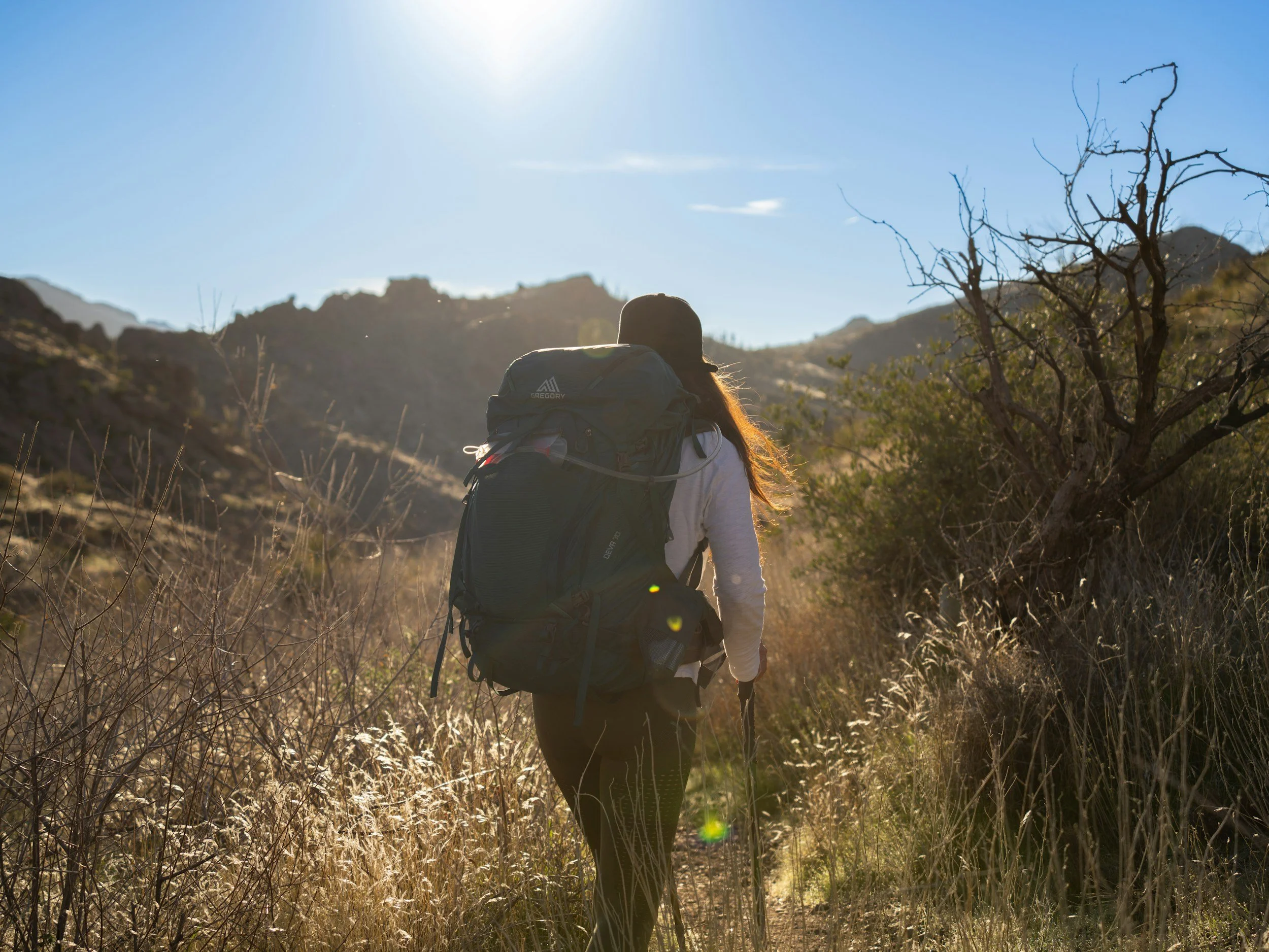
Long before the first mile, before boots hit dirt or anyone sits around the campfire or reaches a summit, they can often tell who has packed too much—or too little. Packs come off in the parking lot. Sleeping bags, food, trail mix, multiple flashlights, rain gear, water filters, and extra layers are spread across the ground. Someone inevitably asks the same question: 'Do I really need all of this?' Usually, the answer is no. In fact, you may need other items you haven’t considered. An overly stuffed backpack can become a burden, but conversely, a pack lacking key elements can make for an equally challenging trip. Experienced guides know that learning to pack isn't about being an expert outdoors person.
Nature Awareness and Mental Health Outside
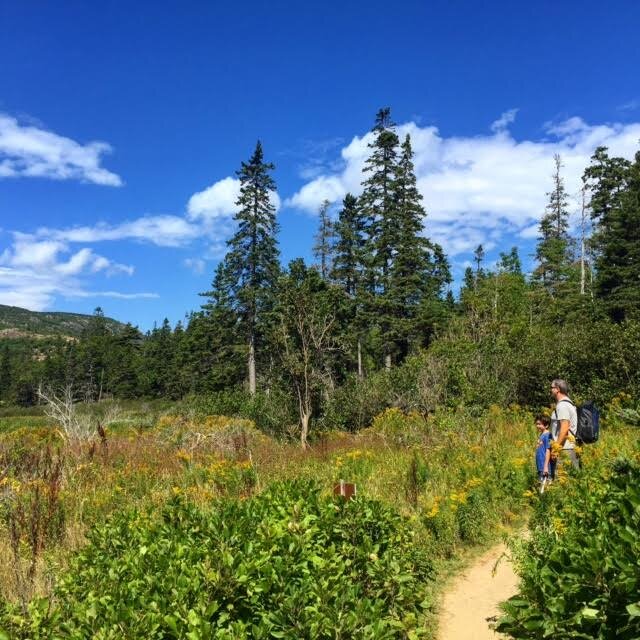
AR founder on a hike with his son
New adventurers often pack for their fears rather than the trail ahead. Every unnecessary item seems insignificant on its own, but once combined, the weight changes the journey. A heavier pack affects posture, breathing, pace, and, eventually, the experience overall.
Experienced guides know that learning to pack isn't about hiking, backpacking, or being an expert outdoors person. It's about learning to distinguish between what is essential and what feels safer to carry. Over time, we discover that the same lesson applies far beyond the trail.
The metaphors in nature-based experiences are rich in helping us contextualize our approach to life. Further, the outdoor context can be powerful in illuminating how we take on, and even hold, the emotions and feelings of others. Learning how to frame what we carry through this lens teaches us how to pack efficiently to go the distance, both on the trail and in daily life. The learnings are a huge part of why we go. Out there, we’re called into awareness and generate new neural pathways to integrate this learning.
What We Carry: The Invisible Backpack
Whether we realize it or not, each of us carries an invisible backpack through life. Some of what's inside belongs there: responsibility, love, grief, aspirations, integrity, and hard-earned experience. But many of us also carry burdens that were never ours to begin with—a parent's anxiety, a child's addiction, a partner's emotions, a friend's choices, or the belief that if we sacrifice enough, we are lovable or can save someone else. Mental health can suffer when we’re not aware of the load we carry.
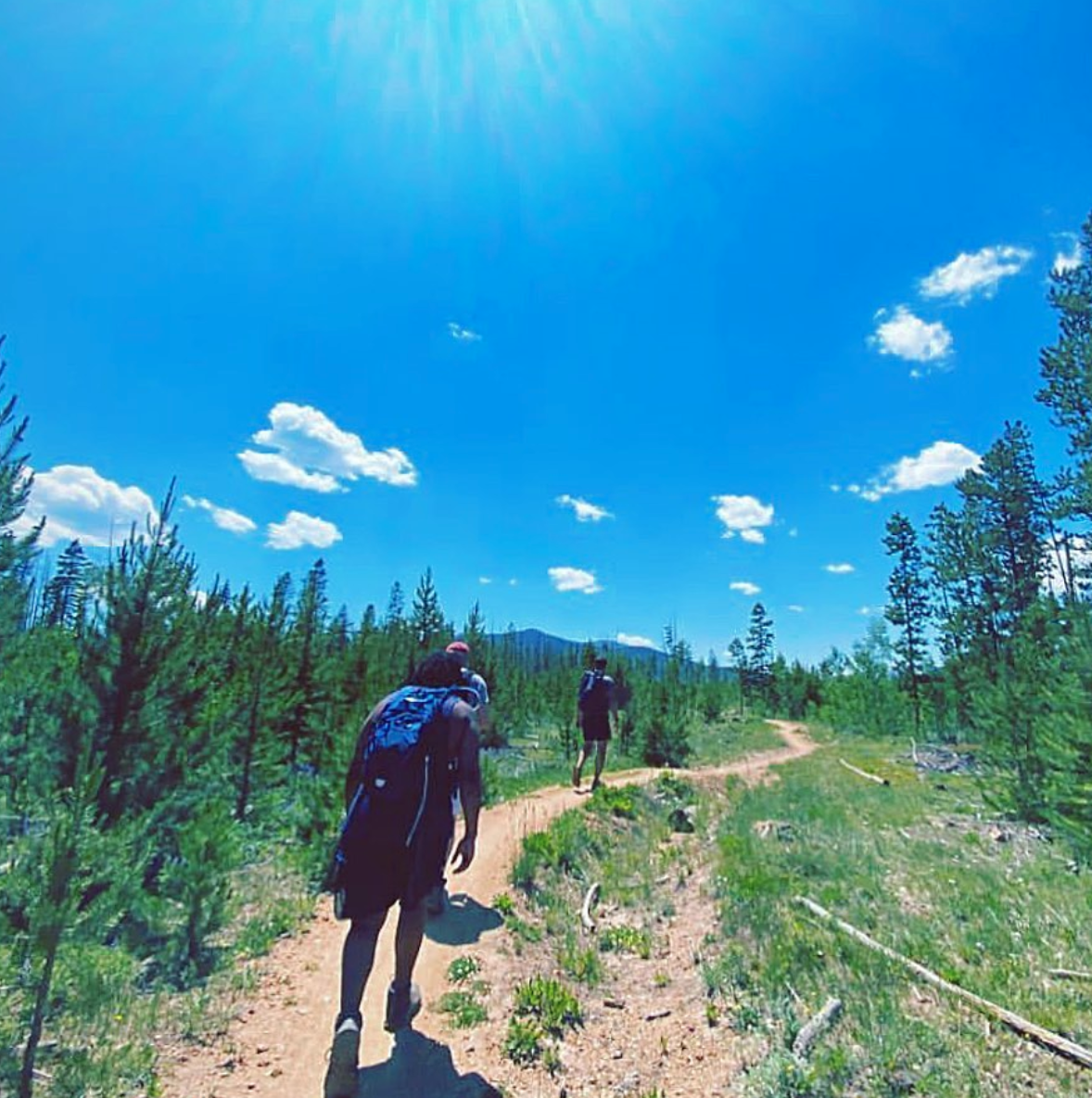
AR Coach Training, Colorado, 2022
The trail exposes unnecessary weight quickly. Life often does the same thing, only more slowly. What’s more, in daily living, we may not feel the impact of the weight as tangibly as we do outside. It can take weeks, months, or even years to notice the burden of stress. This is especially true for those of us who’ve experienced attachment issues, a lack of clear boundaries, relational trauma, or other types of trauma. We may feel that the more we can carry, the more it's a badge of honor or courage, or that we're martyring ourselves. Perhaps the other way around: we’ve detached so completely that we are isolated, with an ultra-lite pack that might get us a couple of miles but will never sustain us for the full journey.
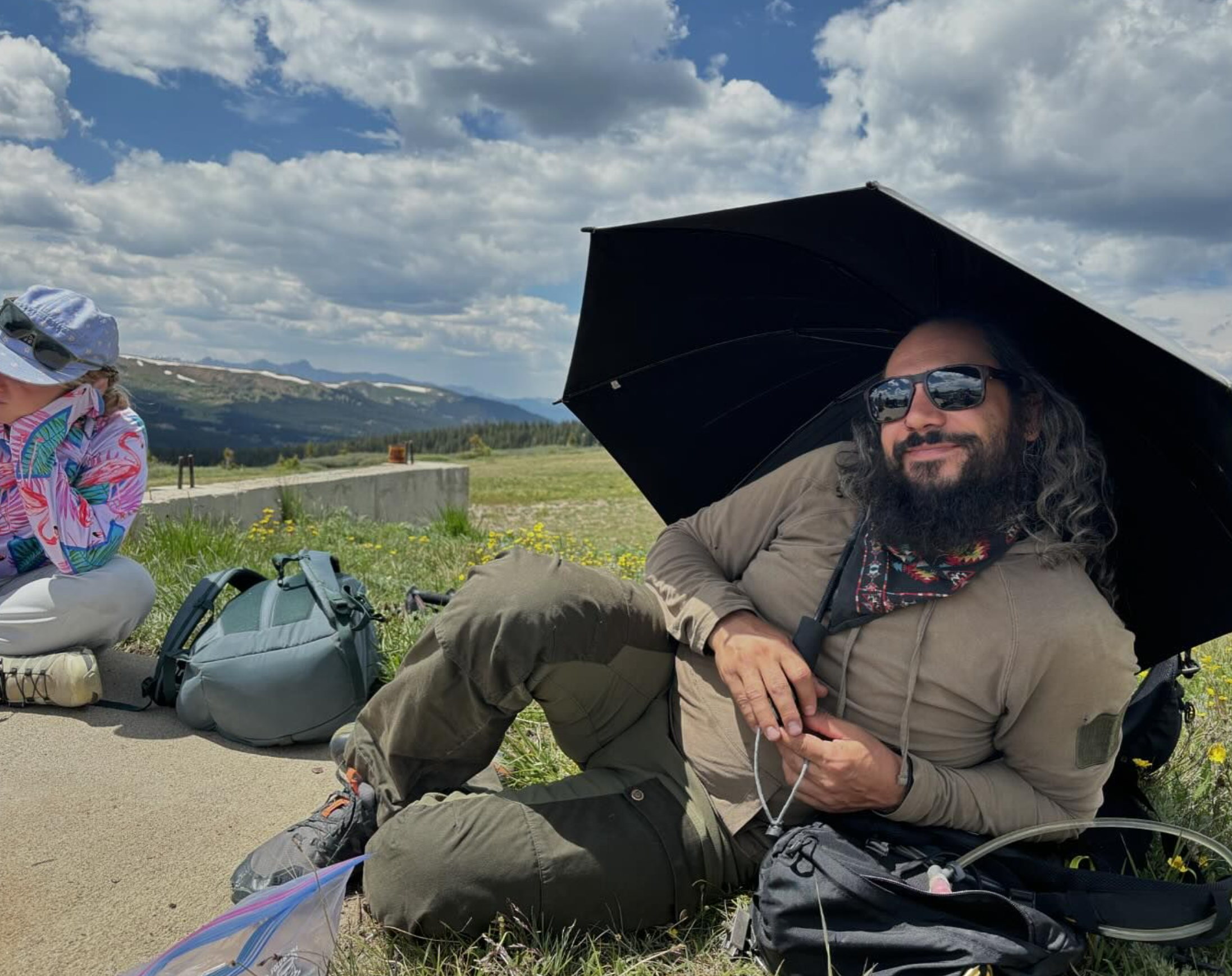
A participant in the field with Adventure Recovery, and an umbrella
Nature Is One of Our Oldest, Wisest Teachers
Nature doesn't simply restore; it instructs. We learn stewardship, patience, humility, responsibility, and interdependence. Good guides encourage, coach, and sometimes briefly shoulder extra weight when safety requires it. But they also understand that carrying another person's pack for the entire journey robs them of the chance to discover their own capabilities.

AR Executive Director, Colorado, Nathan Bennick, with former AR Guide, Bernie, taking it all in on a climbing day
This is the concern for those growing up today. The lack of play for kids (and adults!) is based on safety, but the truth in the avoidance is far riskier: if we don’t fall occasionally and learn to pick ourselves up, we’re doomed to suffer far more than that first fall impact.
This is a big factor for youth today and those who’ve experienced what we now call helicopter parenting. GenX grew up rough and tumble with a lot of risks. Staying outside until the streetlights went on, or until it grew dark, is a different approach to raising kids than using Life360 to track the family’s whereabouts.
We’ve lost some of the healthy risk awareness generations learned through trial and error, and thereby need to learn to contemplate risks, plan for the best, and prepare for the worst. This is a positive approach that is vital in outdoor activities.
The Science on Adventure
For decades, adventure and wilderness professionals have watched people transform outside. Research explains why. Talk therapy is profoundly helpful for many. And healing is not driven solely by insight. Our nervous systems learn through integration. This can mean many things, but in the context of outdoor adventure, it refers to secure relationships, meaningful challenges, and repeated experiences of competence. Supporting someone does not require rescuing them. It requires remaining connected while allowing them to do what only they can—or can’t—do.
Unlike coercive 'tough love' approaches of the past, today’s approach to nature-based adventure therapy focuses on collaborative, safe, and positive outdoor relationships. This comes through skilled guidance, compassionate connection, conscientious communication, and risk-based instruction. Adventure is steeped in this methodology because science is very clear that we are better able to adapt when our nervous systems are regulated. When the sympathetic nervous system is in charge, we’re in survival mode. This is what causes the overpacking. Fight or flight, grab and go. We convince ourselves that, in order to survive, we must be in control, which can manifest as over- or under-packing. However, when the parasympathetic system is engaged, we can slow down and gain a broader context to better absorb what we’re learning.
There is much wisdom from contemporary psychological teachings predicated on the awareness that the body keeps the score. What we once understood as a dichotomous human experience consisting of a body with a detached mind, we now know unequivocally is a deeply nuanced, harmonious system. Now that we know, on a socio-cultural level, that the mind and body are one, we can pack accordingly.
How to Pack: Metaphorical Trail Markers
· What am I carrying today that truly belongs to me?
· What have I picked up because I love someone?
· Where might helping have become rescuing?
· What would it feel like to walk beside someone instead of carrying them?
· What unnecessary weight am I ready to set down?
Further Reading
· Bessel van der Kolk — The Body Keeps the Score
· Daniel Siegel — The Developing Mind
· Peter Levine — Waking the Tiger
· Sue Johnson — Hold Me Tight
· Richard Schwartz — No Bad Parts
Editor's note: This article is part of Adventure Recovery's Field Notes series, exploring the lessons the wilderness offers for living, leading, and healing.