
This is Why We Go
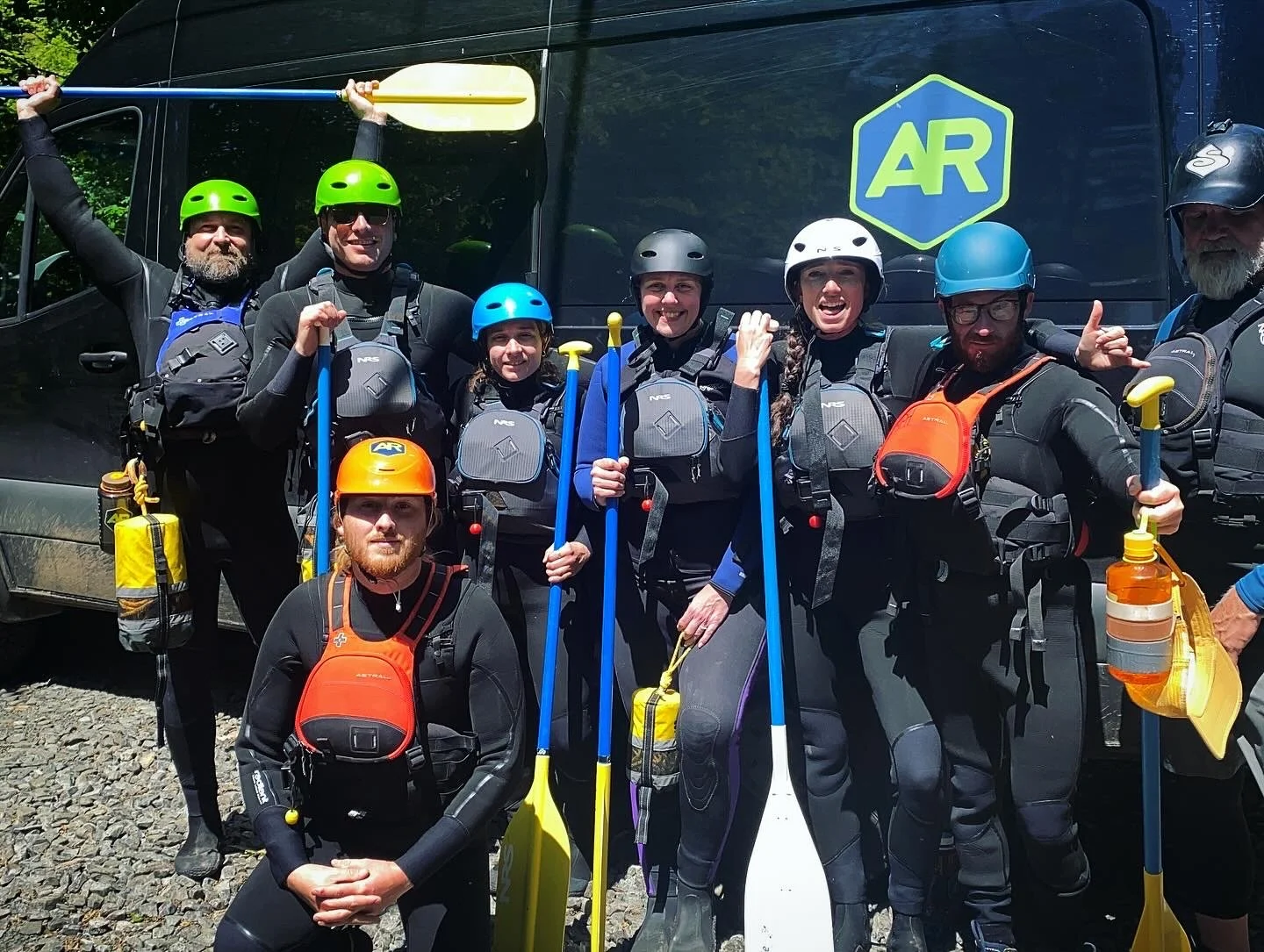
What we mean when we say “This Is Why We Go” is actually a nuanced, complex cascade of positive benefits we reap from time outside. Nature medicine is not just a phrase we use—it’s very real.
Cheryl Strayed didn’t hike the Pacific Crest Trail because she was ready. She did it because not doing it wasn’t an option. Her pack was too heavy to lift, but the grief she carried was heavier. And somewhere in the miles between the Mojave and the Oregon border, something in her body—and her mind—began to reorganize itself around the simple, daily fact of moving forward.
Most of us know that feeling—the one that comes before we embark on something new, before we adapt and change. It can feel challenging, even impossible. But so is the alternative of not changing. Whether you’re navigating substance use recovery, managing anxiety, or simply living in a culture that never turns off, the low-grade static of a life lived (mostly indoors) online has a way of making itself known: something important has gone quiet. The version of yourself you’re showing up as may feel far from who you actually are.
That gap is real. And it’s exactly what the outside world bridges—with its extraordinary capacity to regulate, restore, and reconnect. A growing body of research across neuroscience, ecotherapy, somatic psychology, and movement science is confirming what people like Strayed discovered through lived experience: going outside is not a retreat from your life. It is actually a reset. And it’s one of the most powerful tools available for rebuilding.
The Culture We’re Living In
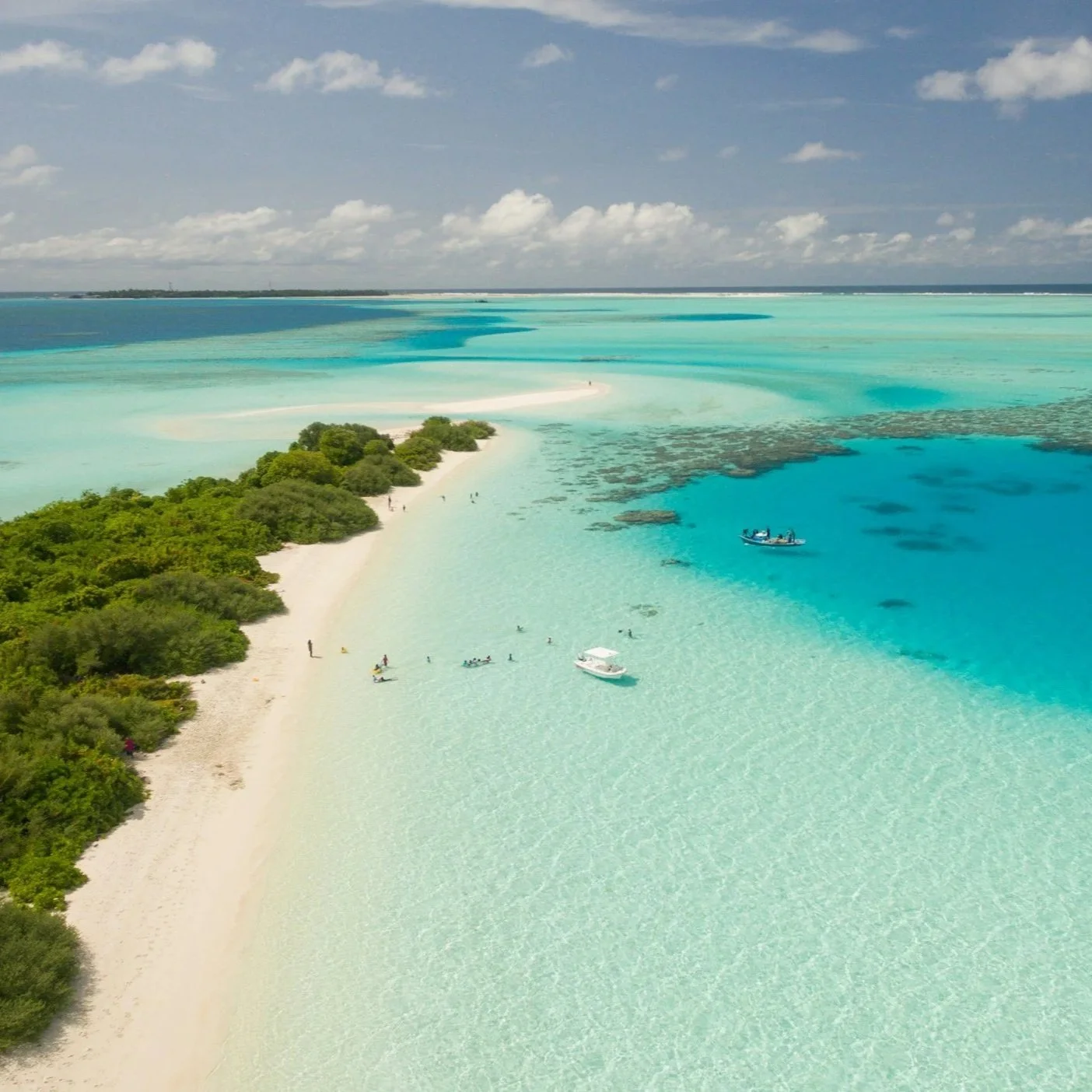
We are living through an unprecedented convergence of mental health, addiction, and disconnection crises. Rates of anxiety, depression, and substance use have climbed steadily for over a decade, accelerated by a pandemic that isolated millions and a digital environment that monetizes attention and dysregulates the nervous system as a business model. Common terms today include doomscrolling, bedrotting, and ghosting. These are not just urban nomenclatures; they are endemic to the disconnect. In 2023, the U.S. Surgeon General issued an advisory with a finding that stopped a lot of people mid-scroll: loneliness now poses health risks equivalent to smoking fifteen cigarettes a day. Not a metaphor. A measurable physiological toll.
The picture that emerges is of a population that is overstimulated, under-rested, increasingly cut off from natural environments, embodied experiences, and genuine human connection that human biology actually requires. Treatment systems are strained. And for many people, traditional models offer only part of the answer. Nature offers another part. And the science behind it is serious.
Our Nervous System Has a Default Setting—and It’s Not Chaos
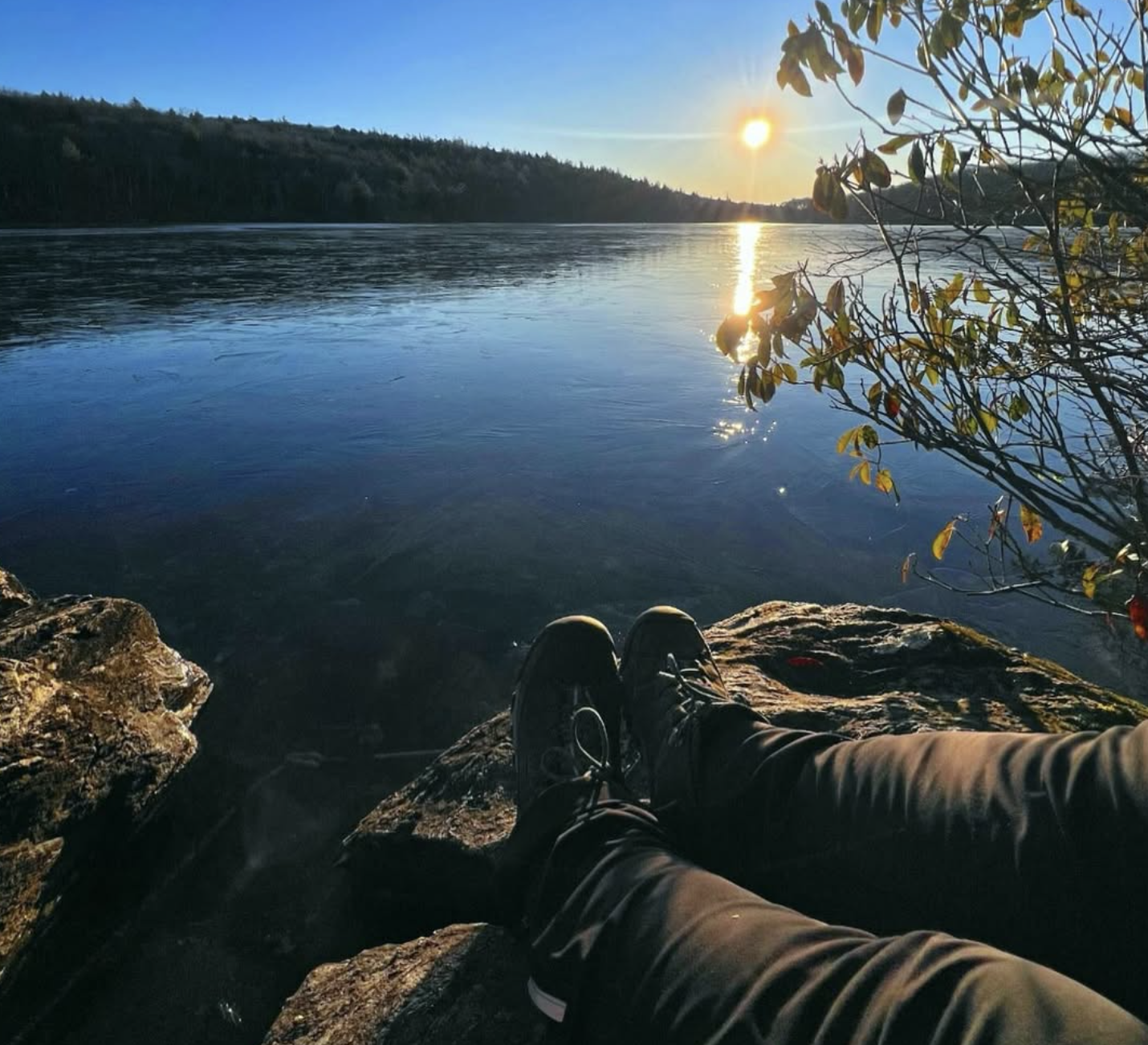
Chronic stress, whether it comes from trauma, addiction, anxiety, or the relentless pace of modern life, does something specific: it keeps the body locked in sympathetic overdrive. That’s the fight-or-flight branch of your autonomic nervous system, designed to keep you alive—to sprint from danger—not sustain a life. When it runs without relief, cortisol stays elevated. Sleep deteriorates. Cognitive capacity declines. Mood drops. Immune function follows. The body isn’t broken; it’s doing exactly what stress physiology says it should. What’s missing is the off-switch.
Nature is regenerative–it’s like the charging cord; it activates us. A landmark series of studies conducted across 62 forests in Japan found that time spent outdoors directly shifts the nervous system toward parasympathetic activity, also known as the rest-and-digest state, lowering heart rate, reducing blood pressure, and decreasing cortisol levels. A 2025 meta-analysis published in Behavioral Sciences found that even a single 10-minute nature immersion produces significant stress reduction, with salivary cortisol dropping 21% and a key stress biomarker falling 28%.
Ten minutes. Not a summit. Not a month in the wilderness. Ten minutes at the threshold between where you live and where the trees start.
The Awe Effect: Feeling Small in the Best Possible Way
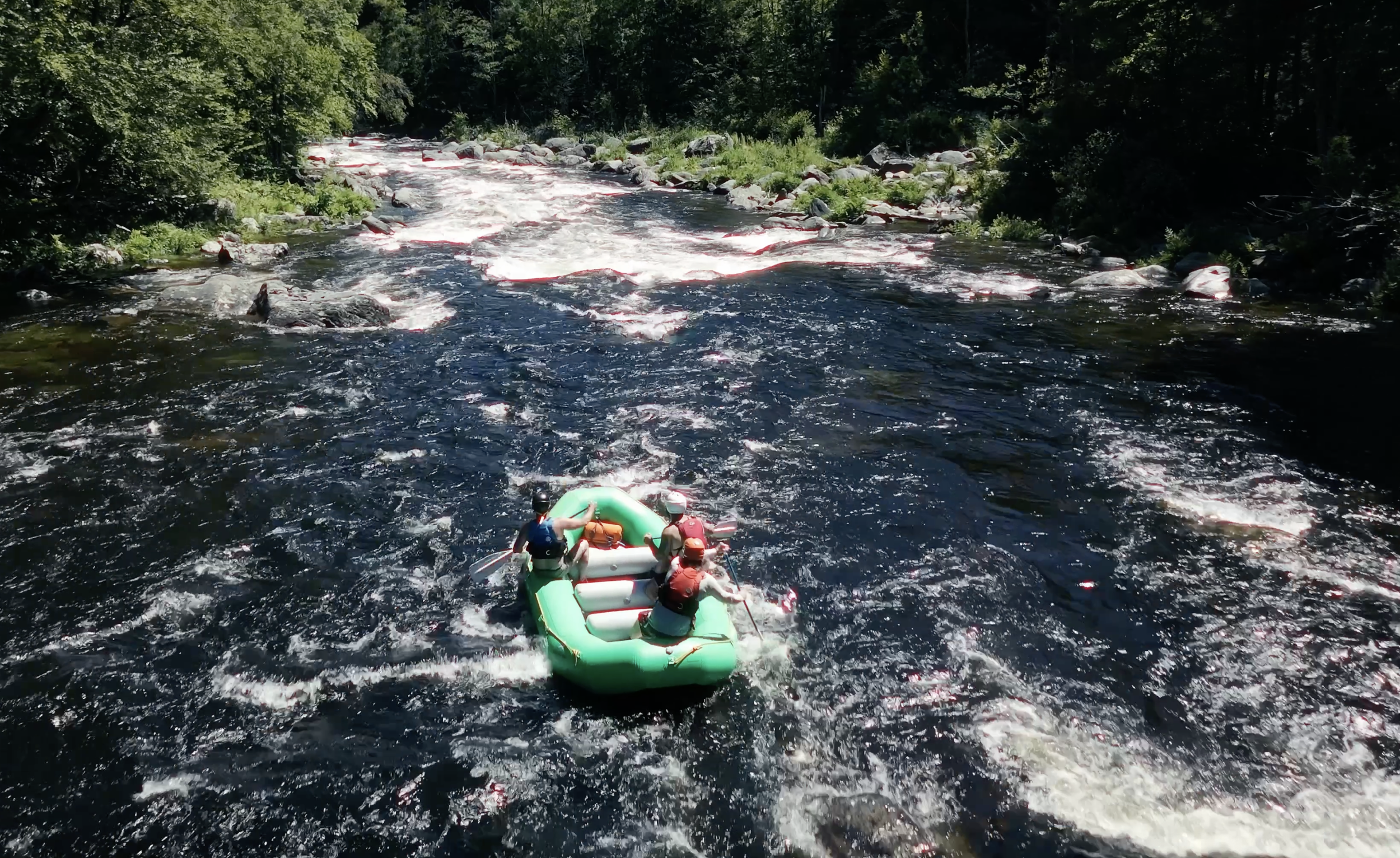
AR whitewater rafting trip
Psychologists Dacher Keltner and Jonathan Haidt spent years studying what happens when humans encounter something vast enough to exceed their current understanding of the world. A canyon, a storm front over a ridge line, the particular quality of light in a forest at dusk: Awe. And what awe does physiologically is fascinating, and measurable: it quiets the brain’s self-referential loop of worry and rumination, reduces inflammatory markers, and pulls attention out of the narrow story of personal struggle toward something larger.
Keltner’s research, expanded in his 2023 book Awe: The New Science of Everyday Wonder, found that people who regularly experience awe report higher life satisfaction, greater generosity, and less preoccupation with status and self. In a word, these individuals are less stuck. For people navigating mental health and recovery challenges, that neurological interruption represents the moment the default mode network goes quiet and something larger takes over. Awe can be powerfully therapeutic.
Nature is awe’s most reliable delivery system. You cannot get there by scrolling.
Water, Sun, Air, Soil: The Original Pharmacy
The elements are not poetic abstractions. They have documented mechanisms. Sunlight drives serotonin synthesis and vitamin D production, both of which are central to mood stability and emotional regulation. Fresh air, specifically the volatile organic compounds called phytoncides released by conifers and other trees, can lower cortisol, reduce anxiety, and increase natural killer cell activity, the immune system’s primary defense. Moving water, the fractal geometry of foliage, the visual complexity of a natural landscape: research on attention restoration theory shows these stimuli allow the cognitive networks worn down by screens and task-switching to recover—passively, without effort.
“So much of what we utilize in mainstream clinical work has origins and roots in how we interact with nature. Distress tolerance, grounding, and bilateral stimulation are all concepts and techniques that emanated from our relationship with the natural world. While great minds have evolved these practices into layered modalities, there is simplicity and great power in simply connecting with the source.”—Josh Flaherty, LCSW, Chief Operating Officer of Adventure Recovery.
In Canada, doctors are prescribing national park passes. Japan built a national preventive health system around this, formalizing it as shinrin-yoku—forest bathing. South Korean research found that repeated forest walks significantly reduced anger and depression. Denmark is prescribing time in nature for patients experiencing stress, depression, or anxiety to structured, group-based outdoor activities. None of it requires altitude, gear, or experience. It requires proximity and presence.
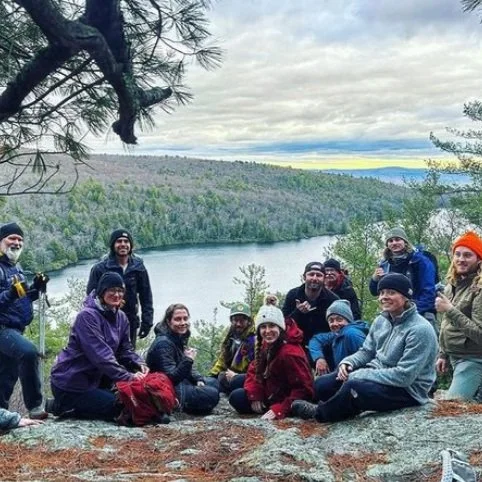
Connection as Medicine
For people navigating recovery or mental health challenges, connection is not a nice-to-have; it is physiologically necessary. Isolation is not just painful; it is harmful in ways that show up in the body. The traditional models, such as 12-step programs and support groups, are based on the vital principle of interdependence, which has proven healing for those struggling. When we can relate to others, we feel less alone. That’s great when we’re in a meeting, but what about the other 23 hours in a day? This is where we can get into trouble. If we don’t learn new behavioral patterns, we can suffer and default back to loneliness or isolation. Silicon Valley knows all about this. And we’re not here to cast aspersions, but data now shows–and court cases are now agreeing as they pay families thousands for damages–that current modalities of communication: smart phones, social platforms, and life online, has turned a mental health crisis into an epidemic. So what’s the solution?
Outside, we look up. We put down the phones and plan an activity. Shared challenge in a natural setting—a river crossing, a summit, a surf trip at the edge of your comfort zone—creates the conditions for trust and interdependence that group chat and TikTok comments simply cannot replicate. You are not performing in these moments. You are present, with other people, doing something real. Accountability is built into the terrain.
We think about what we love, what sites we want to see, and what summits we want to climb. Then, we plan. We dream. We imagine. This is the structure underlying every meaningful transformation: striving, support, shared meaning, forward motion. It is also, not incidentally, the structure of adventure-based recovery programming—and the reason it works.
Start Here
The research doesn’t require a summit. It requires a start. Three low-barrier entry points, backed by science:
1. The 10-Minute Threshold
Step outside without your phone for ten minutes. Sit. Walk slowly. The cortisol reduction documented in the research doesn’t require a national park—a backyard or a city green space works. What matters is sensory immersion in something non-digital, even briefly. Your nervous system will notice.
2. Move Before You Think
Before the hard conversation, the difficult decision, the heavy appointment: move first. Even twenty minutes of moderate movement raises BDNF—brain-derived neurotrophic factor, sometimes called “Miracle-Gro for the brain”—making the nervous system more capable of learning, adapting, and integrating. You’re not avoiding. You’re preparing.
3. Let Something Be Larger Than Your Problems
Find one moment of awe today. It doesn’t require scale—it requires attention. A spider’s web in morning light. The sound a creek makes under a thin layer of ice. The way a flock of birds moves as one. These moments are available most days, in most places. You can’t manufacture them indoors. Go somewhere that offers them.
Nature Medicine
Cheryl Strayed didn’t come back from the PCT fixed. She came back changed in the way that only a body that has learned something new can change a person. The trail didn’t solve her problems. It gave her a nervous system that could meet them differently.
That is what the research keeps pointing toward, and what anyone who has ever stood at the edge of something wild and felt their shoulders drop already knows: the external landscape directly regulates the internal one. Your nervous system knows terrain. Your body knows effort and rest. Your capacity for connection, for awe, for transformation—all of it lives in a body built for the outside world. When we’re in nature, we’re home. This is the part we’re remembering.
This is why we go. Not to escape. To return.
Sources
Hunter, M.R. et al. (2019). Urban nature experiences reduce stress in the context of daily life based on salivary biomarkers. Frontiers in Psychology.
Bettmann, J. et al. (2025). A systematic review and meta-analysis on the effect of nature exposure dose on adults with mental illness. Behavioral Sciences, 15(2), 153.
Li, X. et al. (2025). The optimal exercise modality and dose for cortisol reduction in psychological distress. Sports, 13(12), 415.
Nicholson, W.C. et al. (2025). The body can balance the score: somatic self-care intervention for well-being and healing. Healthcare, 13(11), 1258.
Li, Q. et al. Phytoncides and the human immune system. Physiological Effects of Nature Therapy, NCBI/NIH.
Keltner, D. & Haidt, J. (2003). Approaching awe: a moral, spiritual, and aesthetic emotion. Cognition and Emotion. | Keltner, D. (2023). Awe: The New Science of Everyday Wonder. Penguin Press.
van der Kolk, B. (2015). The Body Keeps the Score. Penguin Books.
U.S. Surgeon General’s Advisory (2023). Our Epidemic of Loneliness and Isolation. U.S. Department of Health and Human Services.
Frank-Richter, S. & Gietzen, D. (2024). Nature healing mental stress: what U.S. healthcare can learn. Pacific Journal of Health, 7(1).
Ratey, J. (2008). Spark: The Revolutionary New Science of Exercise and the Brain. Little, Brown. [BDNF / “Miracle-Gro” attribution]