
Nature-Based Mental Healthcare: What the Science Now Shows
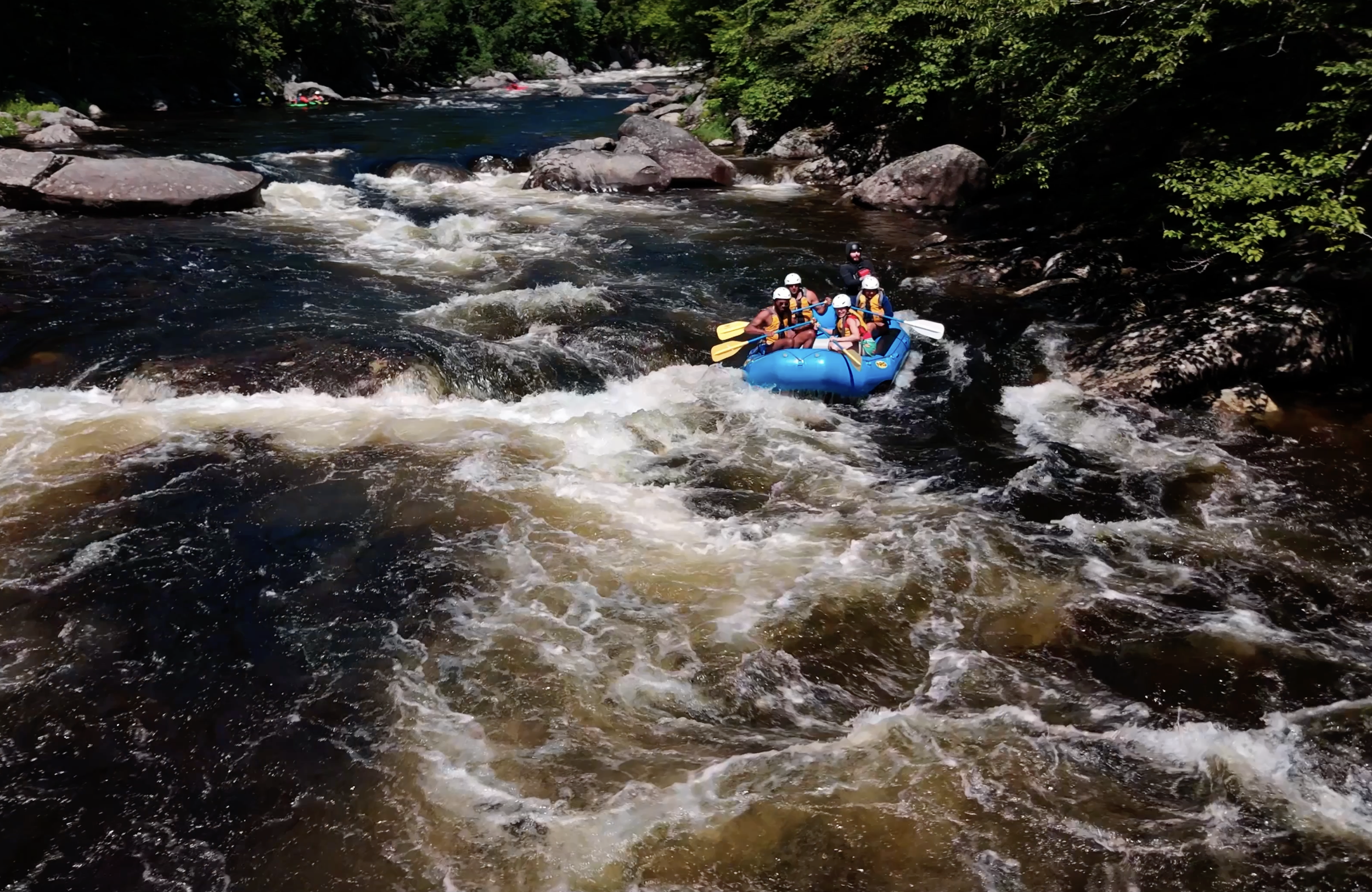
An Adventure Recovery group enjoying a rapid
By the AR editorial team | 14 min read
KEY TAKEAWAYS
93% of our lives are spent indoors, away from the natural world. Dr. John LaPuma, a physician and author, calls this 'digital obesity', a condition of the brain and body characterized by physiological and psychological symptoms
Across research methods, studies find that nature-based programs consistently improve mental health. The benefits are stronger when programs are well-designed, longer, and led by skilled leaders.
When the nervous system is chronically dysregulated, as it increasingly is in a screen-saturated, indoor-dominant culture, traditional talk therapy asks the brain to regulate itself using circuitry that is already overwhelmed.
Imagine someone on a paddleboard at sunrise, learning to fall and try again. Now, imagine scientists in a lab measuring how that experience affects the brain. For the first time, both lead to the same conclusion: nature-based experiences matter.
Nearly 23% of U.S. adults—over 60 million people—experienced a mental illness in the past year. Depression rates have climbed, with more than 47 million Americans now living with depression, according to Gallup's 2025 data. Nearly 40% of American high schoolers reported ongoing sadness or hopelessness in 2023. These are not isolated statistics. They reveal a crisis affecting all ages and backgrounds.
Access to care is not keeping pace. Nearly half of U.S. adults with mental illness received no treatment in 2024, according to the National Alliance on Mental Illness. Among adolescents who needed care, 61% reported difficulty accessing it—a 35% increase from 2018, with a sharp rise after 2020.
The mental health system is overwhelmed, underfunded, and built for a different era. Today, most people live online and indoors, struggling to fit into treatment models designed decades ago. Clearly, we need new solutions. This isn’t just opinion—it’s a measurable fact. Researchers say we spend 87% of our time indoors and another 6% in vehicles. That means we spend 93% of our lives indoors, away from the natural world. Dr. John LaPuma, a physician and author, calls this 'digital obesity', a condition of the brain and body characterized by physiological and psychological symptoms, recently featured by Vice. Information and notification overload create a biological state caused by too much technology and not enough nature. It affects our stress hormones, attention, and sleep, and contributes to rising rates of anxiety and depression across all age groups.
For a growing number of people, the arbitrary wall between the clinical world and the natural one is dissolving. A 2026 systematic review in the Journal of Environmental Psychology synthesized 25 peer-reviewed studies from nine countries, focused on nature-based programs. The results were consistent: getting outside, in the right context, is not just helpful. For many people, it can be the treatment itself.
Research on Nature and Well-being
The review examined a wide range of program formats for adolescents: adventure education, multi-day outdoor expeditions, sailing, surf therapy, forest bathing, environmental education, ACT-informed outdoor therapy (Acceptance and Commitment Therapy delivered in natural settings), and creative modalities such as songwriting on wilderness expeditions. The common thread was not the specific activity. It was the context: structured engagement with real, physical, natural environments led by trained facilitators.
Three separate analyses were conducted across different study designs to test whether positive findings held up under methodological scrutiny. They did so consistently across nine countries and a decade of research. While the original studies focused primarily on adolescents and young adults, the physiological and psychological mechanisms at work—nervous system regulation, stress response, social connection, embodied challenge—are not age-specific. A parallel body of adult-focused research, including a 2025 meta-analysis examining nature exposure in adults with diagnosed mental illness, confirms the same direction of effect across the lifespan.
Across research methods, studies find that nature-based programs consistently improve mental health. The benefits are stronger when programs are well-designed, last longer, and have skilled leaders. The nature prescription offers a wealth of long-term benefits for our overall well-being.
“The clinically therapeutic value of nature cannot be overstated. By engaging in nature-based activities, clients connect clinical concepts such as distress tolerance, mindfulness, and grounding to real-life experiences. They then report it becomes easier for them to transfer those skills to everyday life situations.”—Josh Flaherty, LCSW, executive director of AR.
How Outdoor Programs Improve Mental Health
The science of why this works is not mystical, nor is it simply about fresh air. It is grounded in how the human nervous system actually functions—at any age.
Our brains are constantly adapting. Whether we are adolescents, adults in mid-career, or older and navigating transition, the fundamental mechanisms of stress, regulation, and healing work the same way. The prefrontal cortex—responsible for planning, impulse control, and emotional regulation—is in ongoing dialogue with the limbic system, which governs our emotional life, our sense of threat, and our capacity for connection. When the nervous system is chronically dysregulated, as it increasingly is in a screen-saturated, indoor-dominant culture, traditional talk therapy asks the brain to regulate itself using circuitry that is already overwhelmed.
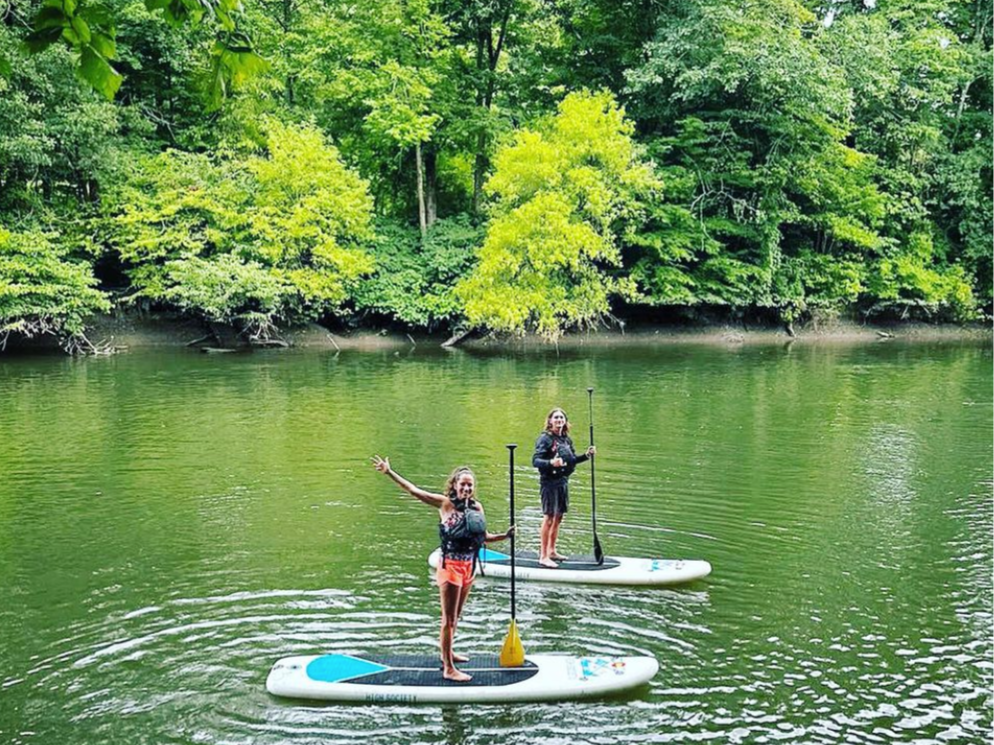
AR guides on SUPs
Whether hiking, paddling, surfing, climbing, or just walking in nature, the body and mind work together to handle stress and build confidence. These hands-on experiences spark neurochemical processes that ignite tangible feelings of wellness and vitality. Furthermore, nature-based modalities offer proof of capacity that talk therapy alone sometimes cannot.
Independent studies on forest immersion confirm these effects. Just 20 minutes among trees can lower stress hormones and blood pressure. Natural sounds during forest bathing—like the birds, wind in the trees, or running water—calm the brain’s stress centers even before we notice. Heart rate variability, a key marker of emotional resilience, improves on nature trails in ways it doesn’t indoors.
"We know nature plays an important role in human health, but behavioral health and health care providers often neglect to think about it as an intervention."—Joanna Bettmann, Professor, University of Utah College of Social Work, Ecopsychology, 2024
What is an Adventure-Based Approach?
Adventure-based modalities are experiential interventions that incorporate natural-setting activities, such as hiking, camping, and snow sports, as the context for cognitive and behavioral growth. Often facilitated by skilled practitioners and/or in groups, adventure-based modalities foster self-awareness, confidence, resilience, and improved social skills by moving individuals outside their comfort zones in a supportive, natural setting. This can be highly transformative, especially with those who’ve succumbed to maladaptive coping mechanisms such as substance use disorder, alcoholism, or self-harm.
What is Nature-based Therapy?
Nature-based therapy is similar to adventure-based therapy in that it uses the outdoor milieu for clinical care, disrupting the confines of traditional psychoanalysis on the couch. Generally speaking, nature therapy consists of therapeutic time spent outdoors with a trained clinician or therapist. As a springboard for somatic and sensory awareness, the outdoors provides a rich source of healing.
Today, nature therapy is gaining prominence as clients and practitioners alike seek alternatives to the at-times constrained model of conventional talk therapy. Getting off the couch and into nature can help clients overcome the discomfort of the traditional dichotomy of clinician/client.
In terms of clinical impact, the research concludes that not all time spent outside is equally therapeutic. A 2025 systematic review published in Frontiers in Psychology, covering 61 reviews across 13 categories of nature-based interventions, identified variables that consistently predict stronger outcomes:
Social accountability: Multiplicity of participants reliably produces stronger outcomes than individual nature exposure alone. Shared challenge and relationship building matter.
Duration and frequency: Sustained, multi-session consistency significantly outperforms single-experience approaches. The nervous system responds to repetition.
Challenge confrontation: The presence of meaningful, manageable risk matters. Programs that include real challenge—not manufactured, contrived difficulty—produce stronger effects.
Autonomy, responsibility, and skills building: Activations that give participants genuine agency over outcomes produce measurably better results than passive nature exposure.
Spending an afternoon in a park is not the same as engaging in a structured, consistent outdoor adventure program that focuses on skill-building and personal growth. Both have value, but real, lasting change comes from programs that are longer-term and integrated into daily living.
The therapeutic relationship does not disappear when you move outside. A skilled guide on an expedition holds the same function as a skilled clinician in an office: creating the conditions for awareness, reflection, and growth. The mountain or the river is the medium. The human relationship remains the mechanism.
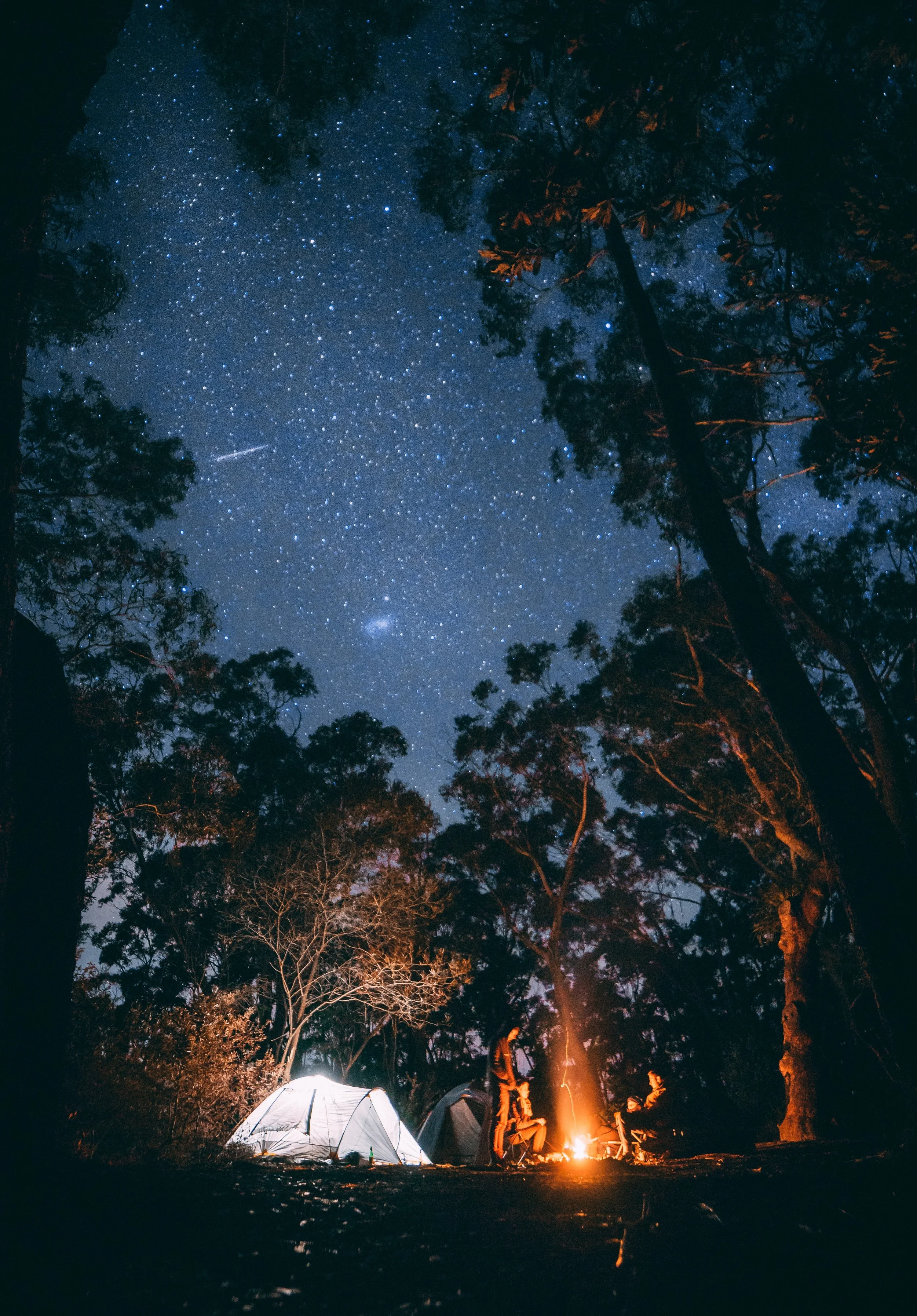
Camping resets our natural rhythms
Implementing Nature-Based Interventions: What You Need to Know
For anyone navigating the current landscape of mental health treatment for themselves, a young person, or someone they care for, the research offers a few clear anchoring truths.
Nature-based approaches are not alternative medicine
Adventure and nature-based interventions are not in tension with evidence-based care. They are, increasingly, part of evidence-based care. If you have resisted traditional therapy, or if it simply has not worked the way you hoped, that does not mean you are refusing help. You may be refusing a container that does not fit how your nervous system actually works. That is a clinically meaningful distinction, and one that research now supports.
The activity matters less than the structure
Surfing, sailing, climbing, canoeing, hiking, and forest bathing—research finds meaningful outcomes across diverse formats when programs are offered with proper facilitation, group structure, and sustained engagement. What you are actually evaluating is not the specific outdoor skill. It is the clinical grounding, facilitator training, program design, and genuine capacity to respond to the individual.
Earlier is better, but it is never too late
The strongest effects in the literature appear not only in clinical populations, but in prevention and early intervention contexts. Getting into well-designed nature-based experiences before a crisis is both possible and protective. But the adult data is equally clear: meaningful gains are available at any stage, for people who have been struggling for years and for those who are simply looking for a more sustainable way to maintain well-being.
Nature Medicine in Action
The work happening outside, one human being guiding another, is real transformation and evolution. This is not metaphor. This is the intervention. The moment of challenge, the grounded relationship, the accountability, the physical resolution—these are the active ingredients the research is finally giving us language for.
For people facing a mental health crisis that the current system can’t solve, some of the most powerful medicine has always been waiting outdoors. Now, science is catching up to what nature has long offered.
We’ll see you outside.
Sources
“Systematic review and meta-analysis investigating nature-based interventions for adolescent mental health: Program characteristics and effectiveness.” Journal of Environmental Psychology, January 2026. ScienceDirect.
“Nature-based interventions: a systematic review of reviews.” Frontiers in Psychology, July 2025.
“Nature exposure, even as little as 10 minutes, is likely to yield short-term benefits for adults with mental illness: A meta-analysis.” Ecopsychology, 2024. University of Utah / ScienceDaily.
“Nature-based health interventions for people with mild to moderate anxiety, depression, and/or stress.” International Journal of Environmental Research and Public Health, January 2026.
“Nature-based activities and mental well-being in adults: a study on perceived health outcomes.” Frontiers in Public Health, June 2025.
“The Youth Mental Health Crisis in the United States. Pediatrics” American Academy of Pediatrics, November 2025.
“Mental health of adolescents.” World Health Organization Fact Sheet, 2025.
National Survey of Children's Health: Adolescent Mental and Behavioral Health, 2023. HRSA / Maternal and Child Health Bureau.
The State of Mental Health in America 2025. Mental Health America.
Mental Health by the Numbers. National Alliance on Mental Illness (NAMI), updated 2025.
U.S. Depression Rate Remains Historically High. Gallup, October 2025.
“Wilderness adventure therapy effects on the mental health of youth participants.” Bowen & Neill. Children and Youth Services Review, ScienceDirect.
“Nature therapy: nervous system regulation, HRV, and cortisol findings.” Multiple Shinrin-yoku studies, synthesized 2024–2026.
adventurerecovery.com/resources · Field Notes is published by the Adventure Recovery Editorial Crew. We research what the science says, translate it into language that is useful, and share it freely.